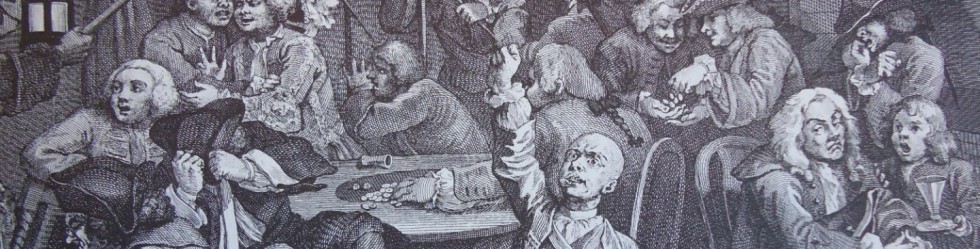
One thing that is becoming quite apparent to me the more historical guidebooks I peruse, is that the only thing that really changes throughout time is fashion. The quest for novelty means that we feel like we are continuously progressing and getting more and more ‘civilised’ with each decade that passes. But all that really changes are the technologies we have, the design of the world we inhabit and the clothes that we wear. If you strip these things back, the people of eighteenth century London are not so different from today’s capital dwellers (well, in spirit I mean, I admit that their smell and their sexual health might be somewhat inferior!)
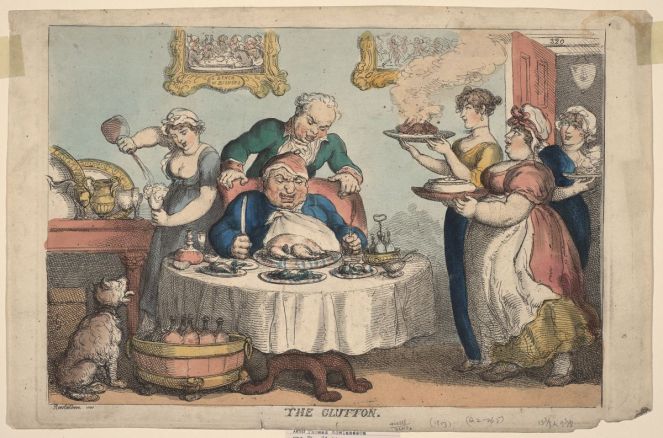
Something that never changes is our appetite for food, and it is a topic that Londoners both present and past have had an obsession with. Perhaps our tastes today have become slightly more worldly, though even then we were importing exotic morsels from across the globe, and our love affair with meat rarely ceases – as today’s burgermania would attest. From the guides I have thus read, it would seem that nothing could shift our zeal for a meat supper, the nickname ‘le roast beef’ didn’t come from nowhere, as the German visitor Frederick Wendeborn observed on his visit in 1786:
“The common people of London, I have observed, are not overfond of fish; for they prefer flesh, as to them the most agreeable food. A foreigner, when he first comes to England, will be surprised to see what flesh-eaters the English are. He will be struck with the sight of an enormous piece of beef, such, perhaps, as he never saw in his life, placed before him upon the table; and being used, in his own country, to a great deal of vegetables, he will be at a loss what to make of a small plate, with a few green leaves, as the companion to the beef, bearing a proportion of one to fifty.” (Frederick August Wendeborn, A View of England)
Even the Englishman Ned Ward was astounded by the vast piles of meat when, in 1709, he visited that Carnivore’s Cathedral, Smithfield market:
“which entertain’d our nostrils with such a savoury scent of roast meat, and surpris’d my ears with the jingling noise of so many jacks, that I star’d a busy number of cooks at work, I thought myself in the kitchen of the universe, and wondered where the gluttons could live who were to devour such vast quantities of sundry sorts of food… We soon deliver’d our squeamish stomachs from the surfeiting fumes that arose from their rotten roasted pork, which made the rounds stink like a Hampshire farmer’s yard when singeing a bacon hog.” (Ned Ward, The London Spy)
Having grown up in England in the 1990s when home cooking experienced a bit of a makeover and people regularly mocked the ‘over-boiled’, pallid vegetables and chewy beef of yesteryear, I was surprised to read this Spanish visitor’s reaction when he visited an Exeter inn en route to London all the way back in 1807:
“I cannot relish their food: they eat their meat half raw; the vegetables are never boiled enough to be soft.”(Espriella Alvarez, Letters from England)
So perhaps the stereotype of English food being cooked until beyond the afterlife is a relatively recent tale. Maybe we were, afterall, pioneers in Europe of the rare steak and al dente carrot? Who knew.
Alvarez didn’t despise everything on the menu though, he was rather taken with the cheese and butter, commenting that there was no substitute in his home country. Ned Ward too was a fan of our dairy produce, particularly after a large meal of “a couple of geese” when he described that: “The conclusion of our dinner was a stately Cheshire cheese, of a groaning size, of which we devoured more in three minutes than a million maggots could have done in three weeks.” Less of the ‘maggot’ talk though please Ned, this is supposed to be appetising.
Finally, to round off your meal how about a hot cup of coffee? Maybe just take heed of the Frenchman William Mavor’s wisdom before you place your order:
“I would always advise those who wish to drink coffee in England to mention beforehand how many cups are to be made with half an ounce, or else the people will probably bring them a prodiguous quantity of brown water; which (not withstanding all my admonitions) I have not yet been wholly able to avoid.”(Wiliam Mavor, The British Tourists; or Traveller’s pocket companion).
Bon appetit!
 Georgian vice