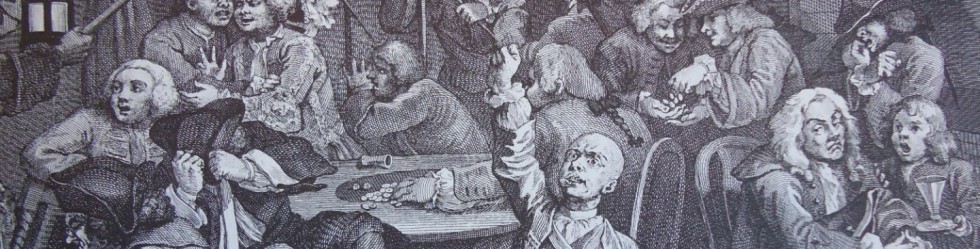
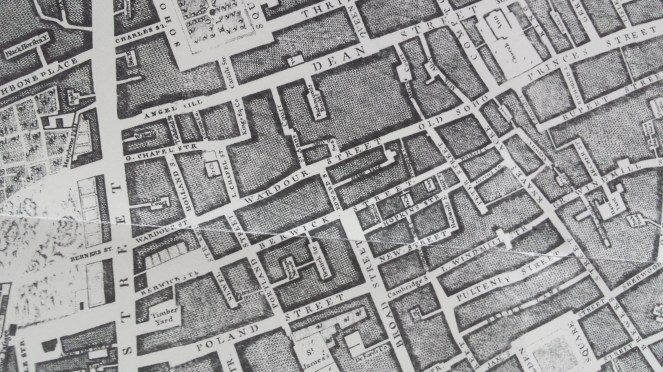
Whenever I step onto the streets of Soho, even today, I am filled with a sense of wistful nostalgia. I am transported back to the day I got my first job as a TV runner, at a post production house on Old Compton street. I remember that afternoon as I left the interview and wandered through the streets and alleyways, the sense of excitement that soon these would be my streets, as familiar to me as those I was leaving at home. It was a gloriously sunny afternoon and people were everywhere, spilling onto the roads as the pavements became like tightropes impossible to balance on. I remember walking passed Patisserie Valerie (in the pre-chain days when it was still an exceptional one-of-a-kind place) and gazing at the giant croissants and tempered chocolate cakes bejewelled with tropical fruits and the important-looking but casually dressed people inside having meetings about important-looking things and I remember feeling that this was the centre of it all.
That afternoon, and the time I spent navigating the streets as a runner in the following months, have left an indelible mark on me. When I think of London, Soho is where I want to be. I don’t think it’s the same for people who have never worked or lived there. But once you have, there is no going back. Soho, like much of London, is an ever evolving neighbourhood with new shops and cafes coming and going every week. But that doesn’t make it any easier when much loved institutions disappear to make way for new concrete blocks. Even in the short time Soho and I have been friends there are places that I have had to say a mournful goodbye to. Never again will I be able to peruse the tat in ‘That’s Andy’s’ or breathe in the fog of incense whilst buying a last minute fancy dress item from the basement of ‘So-high Soho’. And whilst places like these sound unimportant and trivial, their demise signals the demise of Soho’s soul, its identity as a place where all kinds of eccentric and intriguing characters happily mingle together dedicating their vibrancy to its streets.
Its been this way for centuries. Each new Soho generation expressess fresh outrage and sadness at the loss of what was there before, at how the soul of the place is gradually being bought off piece by piece. A walk up Brewer St and into Berwick St via Walker’s Court today only serves to emphasise the truth of this. Billboards proudly display the ‘new look’ for this previously mystical alleyway and I read them with horror.
Berwick street market is the latest Soho institution to fall victim to this endless threat of destruction. Just recently an article in the Guardian highlighted that Westminster Council were attempting to privatise it by bringing in a commercial operator. A move which is likely to have an irreversible effect on the ability of the current stallholders to maintain their businesses. The article muses whether this is ‘Soho’s last stand’. (You can sign a petition against this decision here).
The market is not as sizeable, varied, or even as notable as many of London’s other bazaars. It modestly covers the central bit of road between the random assortment of shops and cafes on either side of the street and offers a hotch potch of mostly food-related goods. None-the-less, it forms an interesting and important piece of London history. Records on the early days of the market are few and far between so we can’t be exactly sure when it came into being: it wasn’t officially recognised as a market until 1892 but we know there were street traders much earlier than this. The market started off, in the eighteenth century, as a sort of shop extension for the permanent traders on the street, displaying their goods on the outside in order to entice people in. A committee meeting in 1778 ‘summoned’ ten brokers for doing so, advising that they ‘be careful in the future’[1]. At that time Soho was largely inhabited by descendants of the Huguenots who Charles II had granted sanctuary to almost a century earlier. London chronicler John Strype’s 1720 description indicates that many had settled here, he describes Berwick Street as a: “pretty handsome strait Street, with new well built Houses, much inhabited by the French, where they have a Church.”
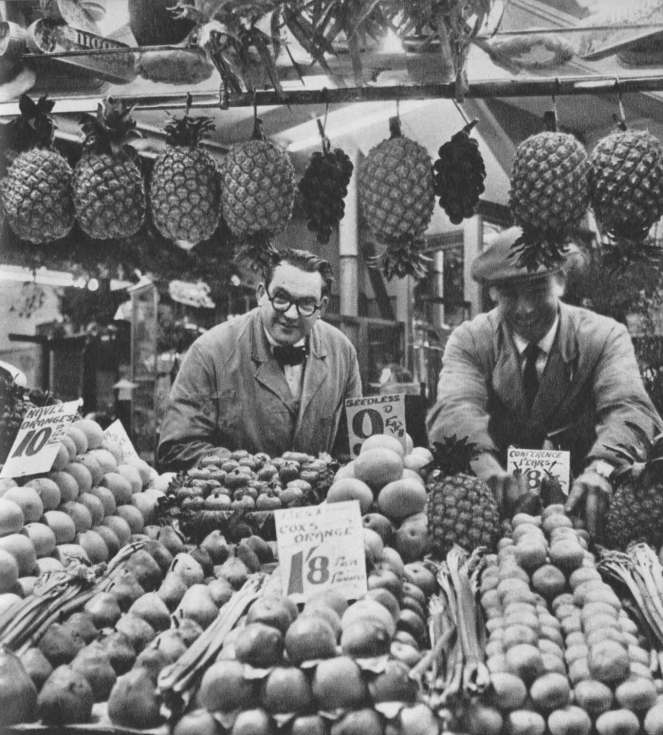
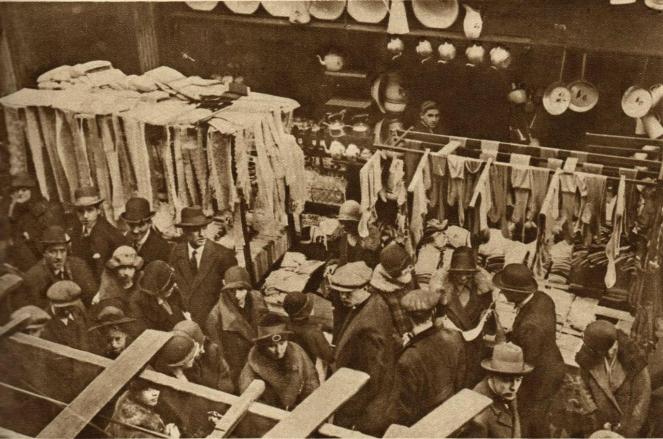
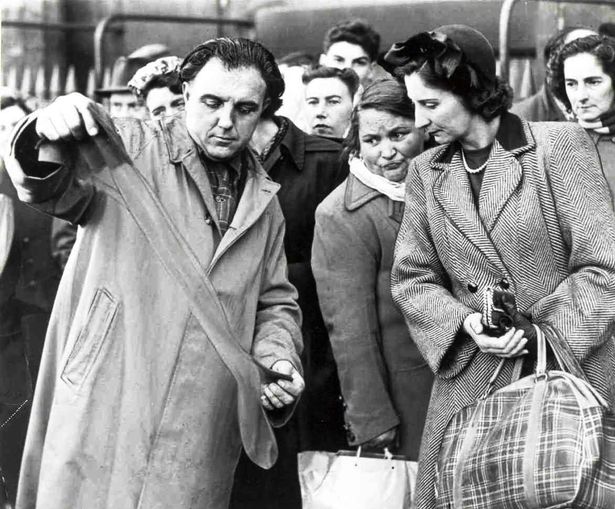
It is unclear at what point the market sprouted fruit and veg stalls – perhaps out of demand from the ever-thriving Soho restaurant trade – but it was once renowned for its continuous supply of the exciting and exotic. For instance, it was said to be Jack Smith, a Berwick Street trader, who first introduced grapefruit to Londoners in around 1890[2]. The twentieth century proved equally fruitful for Berwick Street traders. During the war it became THE place to buy illicit stockings and other black market goods. The wheeler-dealer Herman Schulz (with a surprisingly Germanic-sounding name) was caught hawking undercrackers at the market in 1943, with £3,000 cash profit stashed in his flat. He was sentenced to three months’ hard labour and handed a £500 fine for his troubles[3]. Sadly, I don’t have an image of Herman Schulz so the below will have to do… Although I assume he had a bit more pizzazz than this man.
These days the wares on offer are not particularly specialist or exotic, you’ll find burritos and sandwiches among the fruit and veg but if you want chia seed or coconut oil you’re probably better off heading to Borough. It doesn’t have the gaudy guilded architecture of Leadenhall, the endless flora and fauna of New Covent Garden, or the multiculturalism of Brick Lane. But what it does have in absolute abundance is character, spirit and history. A history that could so be easily forgotten. This isn’t nostalgia for nostalgia’s sake, this is about preserving something vital and important to the spirit of London’s most unique neighbourhood, and isn’t that worth fighting for?
Notes:
[1] British History Online (http://www.british-history.ac.uk/survey-london/vols31-2/pt2/pp219-229#h3-0008)
[2] Tames, Richard & Shelia. Covent Garden & Soho: the illustrated A-Z historical guide. London: Historical Publications, 2009.
[3] Hutton, Mike. Life in 1940s London.
 Georgian vice